2015-08-21
 490
490

| 1. Aeronautical Information Publication | ─ Better known as AIP |
| 2. Notices to Airmen | ─ Better known as NOTAM |
| 3. Flight plan | ─ A document prepared by the pilot before his flight |
| 4. Airway | ─ A corridor generally comprising a width of 5 miles on each side of the centre line equipped with radio navigation aids. |
| 5. Facilities | ─ Services provided. These include buildings, such as hangars, or airport terminals, also communications, or fire fighting services etc. |
| 6. Elevation of aerodrome | ─ The height of the aerodrome above mean sea level. |
| 7. Briefing Officer | ─ The person who provides information before the beginning of the flight and receives the pilot's Flight Plan at the aerodrome of departure. |
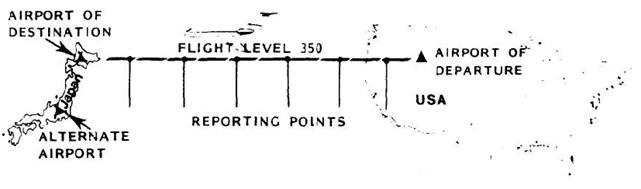
| 8. Alternate aerodrome | ─ The aerodrome of second choice used when the aerodrome of destination is closed because of bad weather. |
| 9. Cruising speed | ─ This is the airspeed the aircraft maintains in straight and level flight. |
| 10. IFR | ─ Instrument Flight Rules. These rules must be used when visibility is poor but many flights are controlled in accordance with these rules even in good weather. |
| 11. VFR | ─ Visual Flight Rules. When visibility is good a pilot may fly in accordance with visual flight rules. |
| 12. Reporting points | ─ A specific geographical location in relation to which the position of an aircraft can be reported. |
| 13. To stray | ─ To deviate, to drift or go somewhere without intention. |
| 14. Centreline | ─ An imaginary line in the centre of an airway or a visual line in the centre of a runway. |