2020-09-24
 197
197

Make up the summary of the text using the questions to organize your answer:
1. Why was taxation screwed up to the maximum in 1646 under Tsar Alexei?
2. What tax did the Tsar Alexei impose instead of different commercial duties?
3. Why were many tons of fish spoiled? Was it disastrous for the Russian economy?
4. When was the salt tax abolished?
5. How did the government compensate for the loss of revenue? What taxes did it introduce?
Vocabulary notes
military needs военные нужды
screwed up взвинчены
taxable item налогооблагаемый товар
point of production место производства
uniform rate единая ставка
commercial duties торговые пошлины
levy налог
salt riots соляные бунты
disrupt подрывать, разрушать
treasury income доход в казну
irked folk раздраженный народ
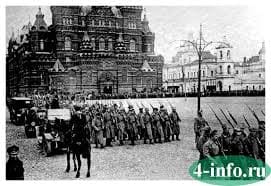
besieged Tsar осажденный царь
mayhem нанесение увечья
heads on pikes головы на колах
bought off выкуплены
exile ссылать
spoil портить
direct taxes прямые налоги
triple утроить
loss of revenue потеря дохода
UNIT 7
PART 1
TOPIC FOCUS: VAT
Discuss these questions with a partner.
1. What is VAT?
2. When did it start?
3. How has VAT changed in modern times?
Exercise 1.
Practice reading the following words and collocations.
a) although; assume; circumstances; deliberately; essentially; exception; further; however; liability; likelihood; manufacture; measure; percentage; perspective; previously; straightforward; ultimately; unduly;
b) allowable purchase; accounts-based or invoice-based; constant fraction; corporate income tax; discretionary income; economic chain of supply; excise duties; purchase price; state finance; state revenue; statutory fees; tax haven; value added tax;
c) initially directed at; be subject to; ensure; generate tax revenue; previously paid; offset a tax; recover VAT.
A value added tax (VAT) is a form of consumption tax. From the perspective of the buyer, it is a tax on the purchase price. From that of the seller, it is a tax only on the value added to a product, material, or service, from an accounting point of view, by this stage of its manufacture or distribution. The manufacturer remits to the government the difference between these two amounts, and retains the rest for themselves to offset the taxes they had previously paid on the inputs.
The purpose of VAT is to generate tax revenue to the government similar to the corporate income tax or the personal income tax.
Overview
Maurice Laure, Joint Director of the France Tax Authority, was first to introduce VAT on 10 April 1954, although German industrialist Dr. Wilhelm von Siemens proposed the concept in 1918. Initially directed at large businesses, it was extended over time to include all business sectors. For instance, in France, it is the most important source of state finance, accounting for nearly 50% of state revenue.
Personal end-consumers of products and services cannot recover VAT on purchases, but businesses are able to recover VAT (input tax) on the products and services that they buy in order to produce further goods or services that will be sold to yet another business in the supply chain or directly to a final consumer. In this way, the total tax levied at each stage in the economic chain of supply is a constant fraction of the value added by a business to its products, and most of the costs of collecting the tax is borne by business, rather than by the state.
Implementation
The standard way to implement a value added tax involves assuming a business owes some fraction on the price of the product minus all taxes previously paid on the good.
By the method of collection, VAT can be accounts-based or invoice-based. Under the invoice method of collection, each seller charges VAT rate on his output and passes the buyer a special invoice that indicates the amount of tax charged. Buyers who are subject to VAT on their own sales (output tax), consider the tax on the purchase invoices as input tax and can deduct the sum from their own VAT liability. The difference between output tax and input tax is paid to the government (or a refund is claimed, in case of negative liability). Under the accounts based method, no such specific invoices are used, the tax is calculated on the value added, measured as a difference between revenues and allowable purchases. Most countries today use the invoice method, the only exception being Japan, which uses the accounts method.
Some countries (tax havens) have no direct taxes on income and few indirect taxes. They may, however, impose visitors’ taxes to be paid at airports on departure or on hotel accommodation. More common, however, are no indirect taxes, except for excise duties, imposed for social and revenue-raising purposes.
Exercise 2.
In the text, find the answers to the following questions.
1. Do the buyer and the seller have the same perspective on VAT?
2. Was Maurice Laure the first to propose the concept of VAT?
3. Is VAT the most important part of state revenue in terms of business?
4. When is it possible to recover VAT?
5. Who bears the most of the costs when collecting VAT?
6. How can VAT be implemented?
7. What are the methods of VAT collection?
Describe each of them.
8. What is the difference between an output tax and an input tax?
Exercise 3. Find a word in the text that matches each definition below. The words appear in order.
1. The use of something such as fuel or energy, or the amount that people use.
__________
2. (two words) The amount of money that is paid for something. __________
3. To send money to someone. ___________
4. (three words) A tax paid by people on the money they earn, as opposed to a tax that a company pays on its profits . ___________
5. (adverb) At the beginning. ___________
6. (phrasal verb) To be part of a total number of something. ___________
7. (two words) The system of people and things that are involved in getting a product from the place where it is made to the person who buys it. ___________
8. A list that shows you how much you owe someone for work they have done or for goods they have supplied. ___________
9. To take an amount or a part of something away from a total. ___________
10. (two words) A place where people pay less tax than they would pay if they lived in their own country. ___________