2015-10-14
 523
523

a labour economist специалист по экономике труда
an energy economist специалист по экономике (электро) энергии
a monetary economist специалист по монетарной экономике
an international economist специалист по мировой экономике
congestion перенаселенность
to cut across не соответствовать
a detailed treatment детальный, подробный анализ
an individual household отдельное домашнее хозяйство
to aggregate, v собирать в одно целое
aggregate, п совокупность
in the aggregate - в совокупности
aggregate, adj совокупный
the relative Output относительный объем производства
general equilibrium theory теория общего равновесия
to study simultaneously одновременно изучать
the complete pattern полная структура, система, схема
to lose track of the phenomena потерять след явлений
to devise judicious simplifications выработать разумные упрощения
to keep the analysis manageable позволять проводить анализ
to distort reality искажать реальность
to preserve the simplicity of the analysis сохранить простоту анализа
to neglect the chain of indirect effects пренебрегать косвенным воздействием, совокупностью (цепочкой) косвенных результатов, эффектов
to secure higher wages получить более высокую заработную плату
indirectly induced effects воздействие, вызванное косвенными причинами
partial analysis частичный (неполный) анализ
to sweep under the carpet прятать, маскировать (доел, замести под ковер)
to simplify deliberately намеренно упрощать
to retain a manageable analysis сохранить возможность анализа (выполнимый, поддающийся выполнению анализ)
the breakdown of consumer goods классификация (подразделение) товаров потребления
a single bundle отдельная единица, величина (доел, набор)
Assignments
I. Suggest the Russian equivalents
cuts across the large number of subject groupings cited above; the sophisticated branch of microeconomics; the complete pattern of consumption, production, and exchange; to devise judicious simplifications; keep the analysis manageable; to retain a manageable analysis; indirectly induced effects
II. Replace the parts in italics by synonyms
pulling out of shape, pay not enough attention, pay no attention; think out, plan; keep safe, brought about, showing good sense; keep; make less complicated; as a rule, characteristically, be sensible
III. Fill in the gaps with the words and expressions from the text
1. What distinguishes different economists is in which they are interested.
2. Urban economics deals with city problems: land use, transport,, and housing.
3. We can also classify branches of economics according to that is used.
4. The very broad division of approaches into microeconomic and macroeconomic the large number of subject groupings.
5. To discuss total car purchases and total car production we can the behaviour of all households and all firms.
6. The sophisticated branch of microeconomics known as __ studies every market for every commodity.
7. The task for economics is to devise simplifications, which keep the analysis without________________.
8. Microeconomists tend to offer of one aspect of economic behaviour but with the rest of the economy in order to of the analysis, largely the chain of.
9._ When microeconomic analysis ignores such indirectly induced effects it is said to be.
10. Macroeconomics the individual building blocks of the analysis in order to a manageable analysis of of the economy.
11. Macroeconomists prefer to treat cars, bicycles, televisions, and calculators as a single called "consumer goods".
IV. Check your grammar
Define each of the words given below, using the pronouns who and which:
* an energy economist is..
* microeconomics is......
* international economics is...
* a monetary economist is...
* consumer goods are...
* macroeconomics is...
* a worker is...
* a miner is...
* coal is...
Complete the following sentences using adjectives or/and adverbs:
e.g.: a relatively difficult branch (adverb and adjective)
an expensive cassette player (adjective)
to buy something cheaply (adverb)
1. This is a book to read, (comparative, easy)
2. car production is not always to estimate (total, easy, general)
3. Even some ____ tools of_____ analysis are not known, (common, economic, general)
4. Some microeconomic analyses offer ________ detailed treatments of decisions, (extreme, individual)
5. If we compare the market for cars and bicycles, we may be able to
offer a explanation for their prices, (careful, good, relative)
6. she managed to pass her exams. (fortunate, final, easy)
7. My tutor emphasized the_____________ importance of putting ideas in a order. (great, logical)
8. analysis ignores induced effects, (partial, indirect)
9._ The_______________ economist keeps his analysis without distorting reality. (sensible, manageable, undue)
10. She's an___________ novelist - something and happens_in her stories. (excellent, unusual, exciting, constant)
V. Find in the text English equivalents for the following
перенаселенность; собирать в одно целое; теория общего равновесия; искажать реальность; подробный анализ (рассмотрение); сохранить простоту анализа; косвенное (непрямое) воздействие (эффект); взаимодействие внутри экономики
VI. Explain in English
consumption; exchange; partial analysis; simphfication; indirect effect
VII. Answer the questions
1.What distinguishes an energy economist from an urban economist?
2.Are the same questions asked in each area of economic life?
3.What is needed before total car purchases and production can be discussed?
4.What does the general equilibrium theory examine?
5.What can be understood from such a study?
6.What happens when an analysis becomes too complicated?
7.What can keep an analysis manageable?
8.What do most microecononhsts leave out of their analysis?
9.What does partial analysis ignore?
10.Why wouldn't most macroeconomists make a breakdown of consumer goods?
VIII. Translate using all the active possible
1. Макроэкономика - это один из основных разделов экономической теории, который изучает поведение экономики как единого целого. Она анализирует взаимодействие факторов, влияющих на рост национального производства, а также такие процессы, как безработица, инфляция, и т. п. Объектом макроэкономики является именно взаимодействие этих величин внутри экономики, при этом сами эти величины рассматриваются упрощенно, абстрактно.
2. Микроэкономика - это один из основных разделов экономической теории, изучающий поведение отдельных экономических единиц, их взаимодействие на рынках, в результате которого формируются цены на производимые товары и услуги и т. д. Микроэкономика стремится к детальному рассмотрению поведения какой-либо экономической единицы, при этом не уделяя достаточного внимания косвенному воздействию этого поведения на другие экономические единицы и на экономику в целом.
Unit 9.
PRICE AND DEMAND (ЦЕНА И СПРОС)
The following text will introduce you to the topic of the effect of price and income on demand quantities.
The Price Responsiveness of Demand
Tabl. 3 presents some hypothetical numbers for the relation between ticket price and quantity demanded, other things equal.
Tabl. 3. The Demand for Football Tickets
| PRICE | Quantity of tickets demanded |
| (£/ ticket) | (thousands/game) |
| 12,50 | |
| 10,00 | |
| 7,50 | |
| 5,00 | |
| 2,50 | |
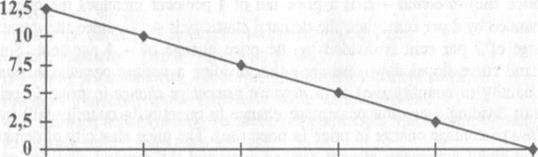
Fig. 2 plots the demand curve, which happens to be a straight line in this example.
Ticket price (£)
 |
0 20 40 60 80 100
Quantity of tickets
Figure 2. The Demand for Football Tickets
For given prices of related goods and consumer incomes, higher ticket prices reduce the quantity of tickets demanded.
How should we measure the responsiveness of the quantity of tickets demanded to the price of tickets? One obvious measure is the slope of the demand curve. The downward slope of the demand curve shows that quantity demanded increases as the price of a good falls. Each price cut of £ 1 leads to 8000 extra ticket sales per game.
Suppose, however, that we wish to compare the price responsiveness of football ticket sales with the price responsiveness of the quantity of cars demanded: clearly, £ 1 is a trivial cut in the price of a car and will have a negligible effect on the quantity of cars demanded.
When commodities are measured in different units it is often best to examine the percentage change, which is unit-free. This suggests that we think about the effect of a 1 per cent price cut on the quantity of cars and football tickets demanded. Similarly, it is not the absolute number of cars or tickets we should examine but the percentage change in quantity demanded. Not only does this solve the problem of comparing things measured in different quantity units, it also takes account of the size of the market. Presumably an extra sale of 8000 tickets is more important when ticket sales are 4000 than when they number 40000.
Thus we reach the definition of the price elasticity of demand, which economists use to measure responsiveness to price changes.
The price elasticity of demand is the percentage change in the quantity of a good demanded divided by the corresponding percentage change in its price.
Although we shall shortly introduce other demand elasticities - the cross price elasticity and the income elasticity - the (own) price elasticity is perhaps the most frequently used of the three. Whenever economists speak of the demand elasticity they mean the price elasticity of demand as it has been defined above.
If a 1 per cent price increase reduces the quantity demanded by 2 per cent, the demand elasticity is - 2. Because the quantity falls 2 per cent, we express this as a change of - 2 per cent, then divide by the price change of 1 per cent (a price rise) to obtain - 2. If a price fall of 4 per cent increases the quantity demanded by 2 per cent, then the demand elasticity is - 1/2, since the quantity change of 2 per cent is divided by the price change of - 4 per cent. Since demand curve slopes down, we are either dividing a positive percentage change in quantity (a quantity rise) by a negative percentage change in price (a price fall) or dividing a negative percentage change in quantity (a quantity fall) by a positive percentage change in price (a price rise). The price elasticity of demand tells us about movements along a demand curve and the demand elasticity must be a negative number.
For further brevity, economists sometimes omit the minus sign. It is easier to say the demand elasticity is 2 than to say it is -2. Whenever the price elasticity of demand is expressed as a positive number, it should be understood (unless there is an explicit warning to the contrary) that a minus sign should be added. Otherwise, we should be implying that demand curves slope upwards, a rare but not unknown phenomenon.